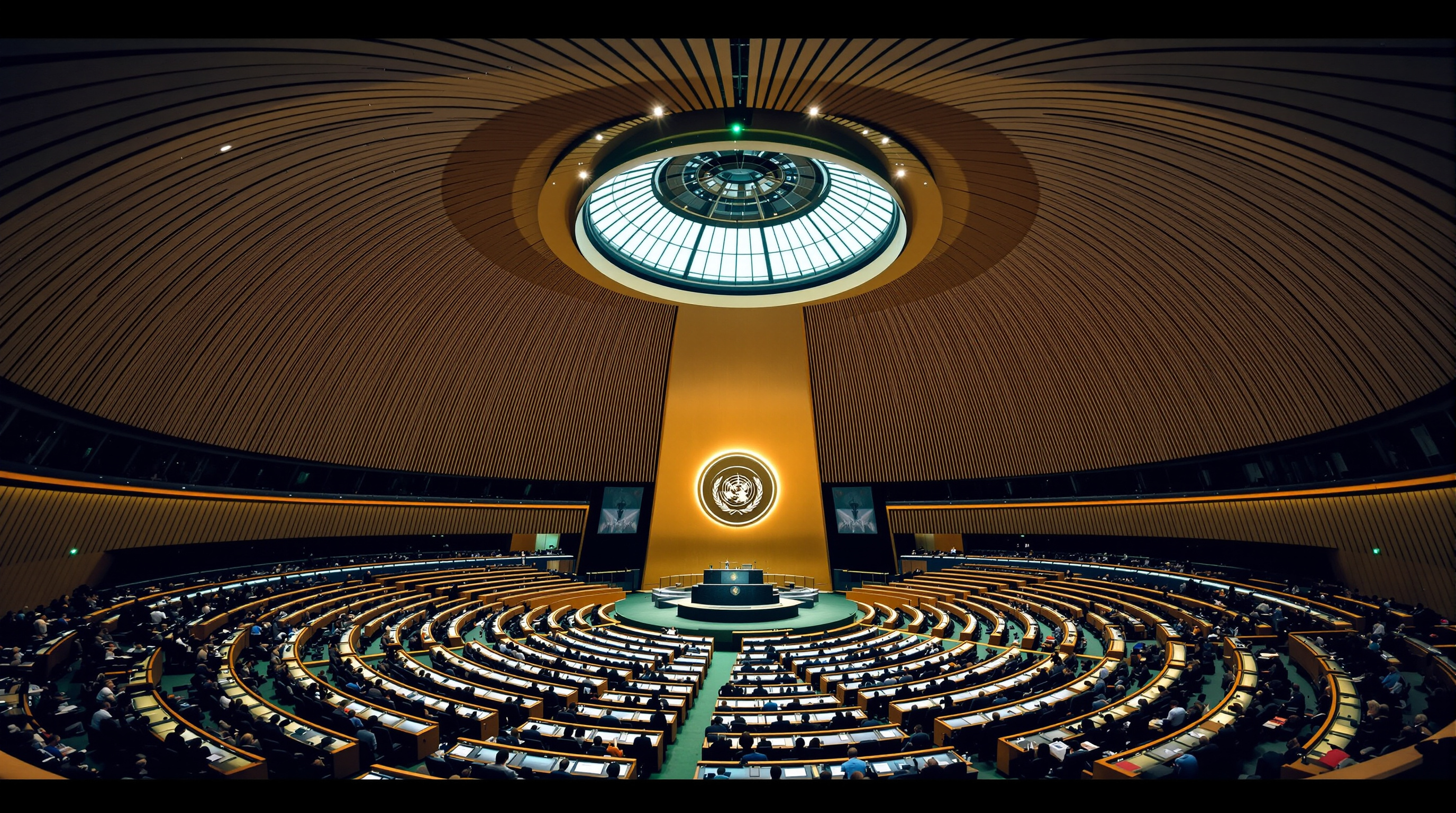
The United Nations is not a world government. It is a voluntary association of sovereign states that agree, by signing the Charter, to pursue shared goals through common institutions. Understanding those institutions — the six principal organs and how they relate — is the key to reading any UN news story with confidence.
Founded in 1945
The UN was established in October 1945, after the Second World War, by 51 founding member states determined to prevent another global conflict. Membership has since grown to 193 states. The Charter sets out the Organization's purposes: maintaining international peace and security, developing friendly relations among nations, achieving cooperation on economic and social problems, and promoting human rights.
The six principal organs
1. The General Assembly
The main deliberative body, where all 193 member states sit with one vote each. It debates the full range of international issues, approves the budget, and elects members of other organs. Its resolutions carry great political and moral weight, though most are recommendations rather than binding law. Learn more on our General Assembly page.
2. The Security Council
Charged with maintaining international peace and security. Its 15 members — five permanent, ten elected — can take decisions that legally bind all member states, including sanctions and the authorization of force. The permanent five hold a veto. See our Security Council explainer.
3. The Economic and Social Council (ECOSOC)
The hub for the UN's economic, social, and environmental work. Through its 54 elected members and a web of commissions and expert bodies, ECOSOC coordinates the agencies, reviews progress on development goals, and gives civil-society organisations a formal channel into the system.
4. The Secretariat
The international civil service that runs the Organization day to day, led by the Secretary-General. Its staff service meetings, carry out mandates, run peacekeeping operations, and prepare the studies and reports on which decisions rest. This is the body most UN careers belong to.
5. The International Court of Justice (ICJ)
The UN's principal judicial organ, seated in The Hague. It settles legal disputes between states and gives advisory opinions on questions referred by UN organs. Its fifteen judges are elected by the General Assembly and the Security Council. The Court's work is described at icj-cij.org.
6. The Trusteeship Council
Created to supervise the decolonisation of trust territories, the Council suspended operations in 1994 once the last such territory achieved self-government. It survives on paper as a principal organ but no longer meets regularly — a reminder that the UN's structure reflects the history of its founding era.
How a decision travels
Consider a typical peace-and-security issue. It may first surface in the General Assembly's debate or in an ECOSOC study. If it threatens international peace, the Security Council takes it up, negotiates a resolution, and — if the permanent members agree — adopts binding measures. The Secretariat then implements: deploying a peacekeeping mission, monitoring sanctions, or delivering humanitarian relief. Meanwhile the ICJ may be asked to rule on any legal dispute, and the General Assembly funds the whole effort through the budget it alone approves.
Consensus, coalitions, and groups
Formal votes tell only part of the story. Much UN business is done by consensus, hammered out in advance among regional and political groupings — the African Group, the Arab Group, the European Union, the Group of 77 developing countries, and others. States coordinate positions, trade support across issues, and co-sponsor resolutions. A member state's influence often rests as much on its diplomacy within these coalitions as on any single vote.
With the architecture in view, you can explore the organs in depth: the General Assembly and its committees, the Security Council, and the human-rights system — or see how one member state operates across all of them in Saudi Arabia at the UN.